
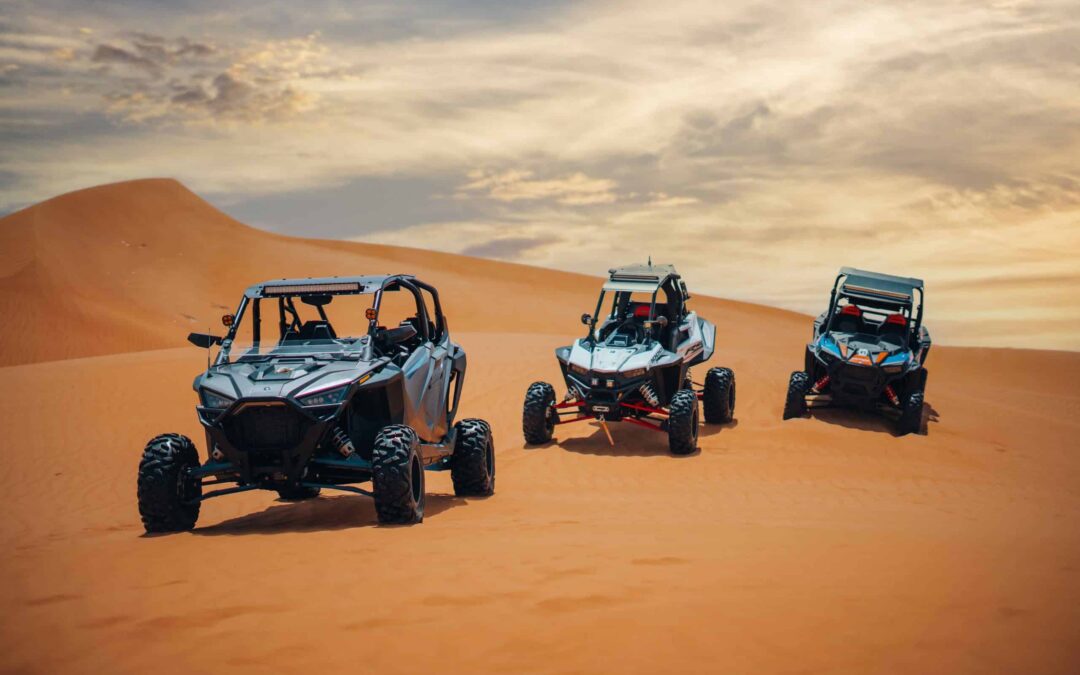
If you’re a desert adventurer, you’ve likely savored the rush of exploring the mesmerizing sand dunes. Dune buggy rides, with their blend of speed, adrenaline, and stunning landscapes, make for unforgettable experiences. But why limit these memories to your mind when you can immortalize them through photography? In this blog, we present photography tips to help you preserve the exhilarating moments of your desert safari.
Equip Yourself for the Adventure:
Before embarking on your desert safari, it’s essential to ensure you have the right photography gear. While you don’t need to invest in top-of-the-line equipment, having some basics can significantly enhance your shots. Here’s what to consider:
- Camera: A digital single-lens reflex (DSLR) camera or a mirrorless camera with interchangeable lenses offers greater control and image quality compared to a smartphone.
- Lenses: Wide-angle lenses are perfect for capturing the vastness of the desert landscape. A lens with a focal length between 16mm and 35mm is an excellent choice.
- Tripod: Though not always necessary, a tripod can be invaluable for capturing stable shots during breaks.
- Lens cleaning kit: The desert’s sand and dust can quickly find their way onto your lens, so be prepared to clean it regularly.
- Protective gear: Employ a camera bag or protective covers to safeguard your camera and lenses from sand and dust.
- Rule of thirds: Divide your frame into thirds both horizontally and vertically, placing your subject or the horizon along these lines for balanced composition.
- Leading lines: Use natural lines in the sand dunes, tracks, or even the safari vehicle to guide the viewer’s eye through the frame.
- Foreground interest: Include intriguing elements in the foreground, such as footprints, patterns in the sand, or desert vegetation, to infuse depth and context into your photos.
- Silhouettes: Experiment with capturing the safari vehicle or your fellow riders as silhouettes against the setting sun for dramatic and evocative shots.
- Shooting from low angles to emphasize the size and grandeur of the sand dunes.
- Using a drone to capture aerial shots of the safari vehicle in motion or the panoramic desert landscape from above.
- Getting up close to capture the details and textures of the sand, vehicle, or even the expressions of your fellow riders.